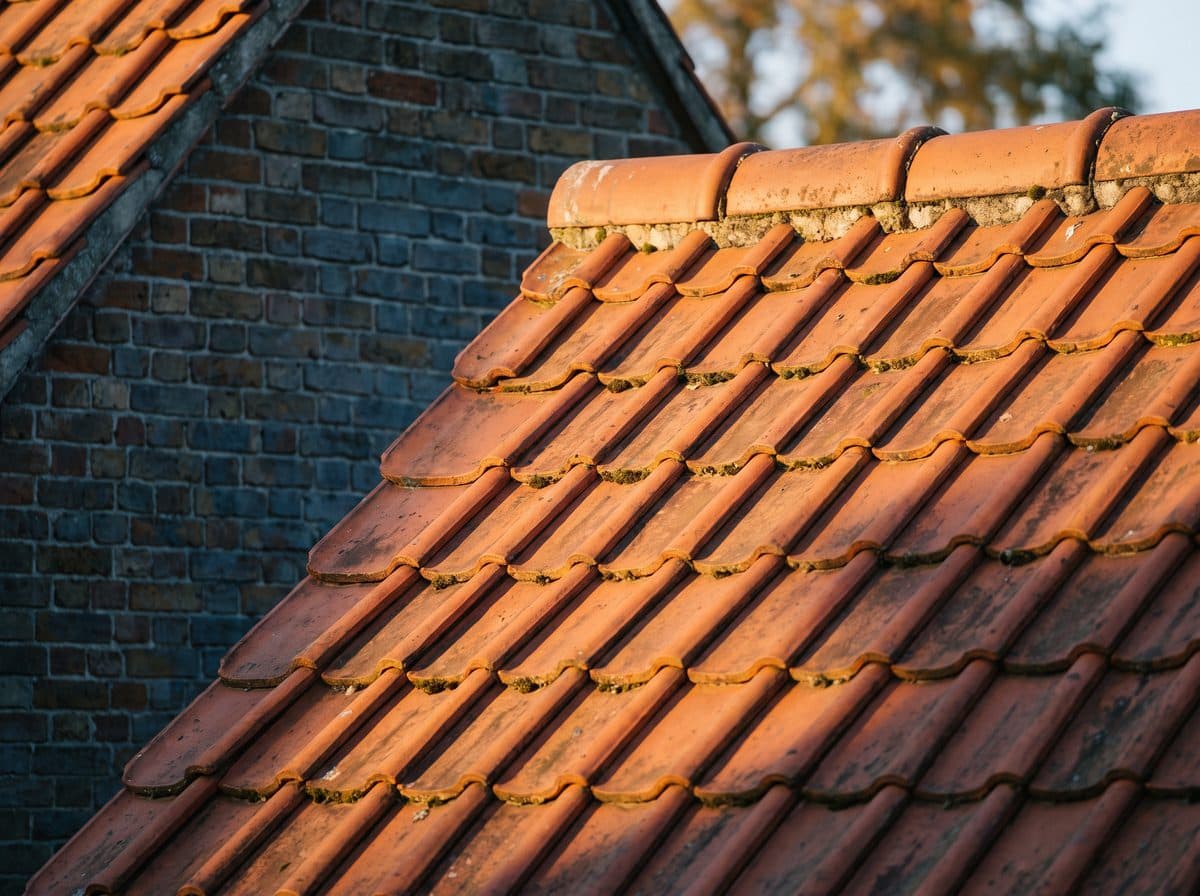
Every roofer gets asked this, usually by someone who has been told by a passing trader that their roof urgently needs cleaning. The honest answer is that moss matters, but not for the reason most people are given, and not always urgently.
Moss does not eat your roof
Moss has no roots in the sense that would let it break into a tile. It holds on in the joints and hollows and takes what it needs from rainwater and the air. On its own, sitting there, it is not chewing through your covering.
What it actually does is hold water
This is the part that matters. A thick moss layer acts like a sponge, keeping the surface of the tile wet long after the rain has stopped and long after an exposed tile would have dried. Through most of the year that is merely untidy.
Then it freezes. Water trapped in and against a porous tile expands as it turns to ice, and that expansion works on the surface of the tile. Repeat it across enough winters and the face of a concrete tile begins to break up — a process called freeze-thaw, and the real mechanism behind most moss-related damage.
Natural slate is dense and absorbs very little water, so it tolerates moss far better than concrete tile does. Which covering you have changes how much the moss matters.
The gutter problem is more immediate
Long before freeze-thaw does anything visible, moss causes a much more ordinary problem: it comes loose in clumps, washes down the slope and blocks the gutters. A blocked gutter overflows, and water running down an external wall through a wet British winter leads to penetrating damp, spoiled pointing and green algae streaks down the brickwork.
In practice this is the reason most mossy roofs need attention — not the roof, the gutters.
Why pressure washing is often the wrong answer
A pressure washer will certainly remove moss. It will also strip the protective surface layer off concrete tiles, leaving them more porous than they were and more vulnerable to exactly the freeze-thaw damage you were trying to prevent. Aimed up the slope it can force water underneath the courses, past the covering entirely.
The right method depends on the covering. Slate, clay and concrete do not want to be treated the same way, and a roof that is already fragile may not want to be walked on at all.
So when should you do something?
Reasonable triggers: moss thick enough to see clearly from the street, clumps regularly appearing in the gutters or on the ground, or a gutter that has started overflowing in heavy rain. A light green film on a north-facing slope is normal for London and not worth panicking about.
And if someone knocks on your door offering to clean your roof today because they happen to be working nearby, take their details and get a second opinion. A free inspection costs you nothing and tells you whether there is a problem at all.
Services mentioned in this article
Roof Cleaning
Safe removal of moss, algae, lichen, and debris. Extends tile life and restores your roof's original look.
Read moreGuttering
Gutter installation, repair, and cleaning for peace of mind. Prevent blockages, leaks, and foundation damage effectively.
Read moreRoof Maintenance
Regular inspections and minor repairs tailored to your roof. Catch small issues early and extend roof lifespan.
Read more