Storms do not damage roofs at random. Wind gets under an edge — a verge, a ridge, a slipped tile, a loose flashing — and lifts from there. Which means that after a bad night, there is a short list of places worth looking at, in a sensible order.
First: is anything unsafe?
Before anything else, walk the perimeter of the house and look for hazards rather than damage.
- Tiles or slates on the ground, on a path, or balanced on a gutter
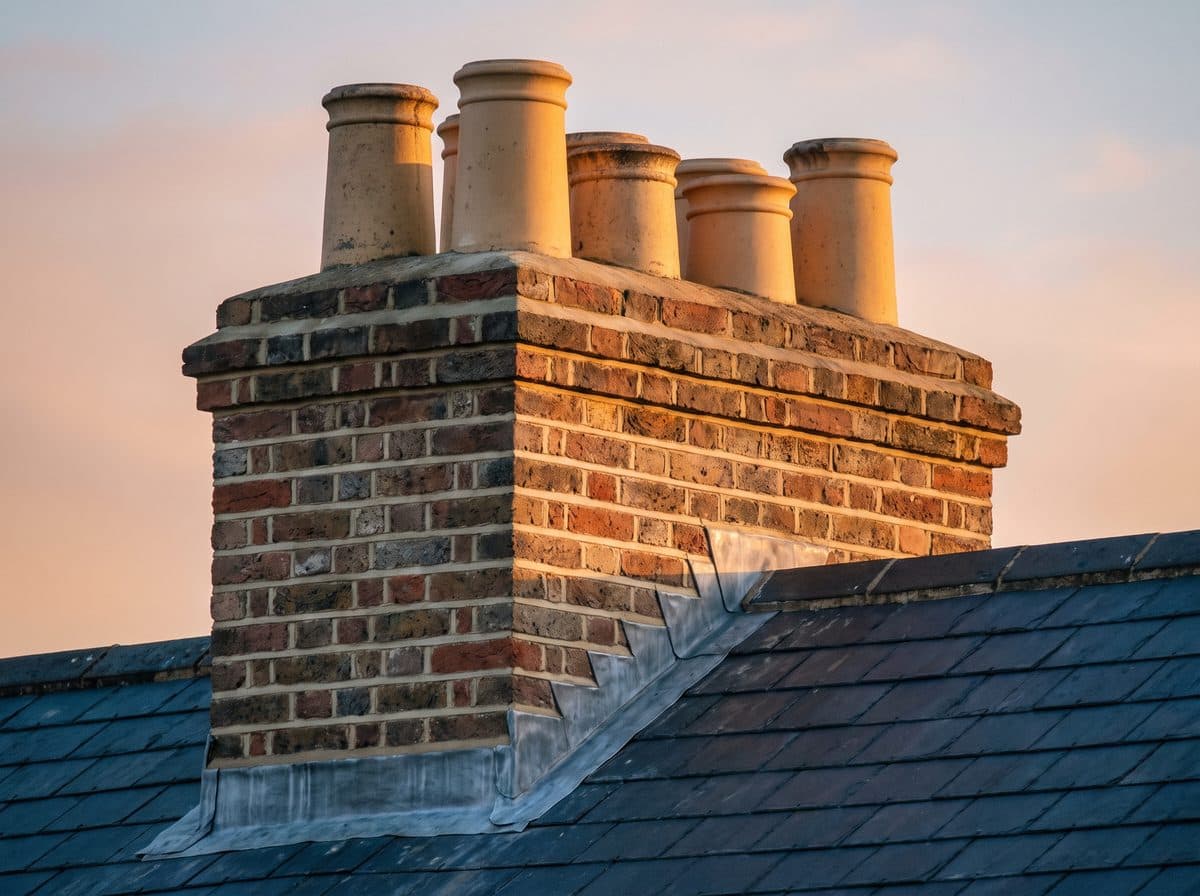
- A chimney stack that looks out of plumb, or loose pots
- Lead flashing peeled up and flapping
- Any debris resting on a conservatory or glass roof
A tile balanced on a gutter or a loose chimney pot is a safety problem before it is a roofing problem. Keep people away from underneath and get it dealt with rather than waiting for the next gust.
Then: look at the roof from a distance
Cross the road and look at the whole slope. Even, regular courses are what you want. What you are hunting for is anything that breaks the pattern.
- Dark gaps where a tile or slate has gone
- Tiles sitting proud of their neighbours, or visibly shifted
- A ridge line that has lost mortar, or ridge tiles sitting unevenly
- Verge mortar cracked or missing at the gable end
- Flashing lifted at a chimney or against a wall
Then: the gutters and the ground
Gutters tell you a lot. Fragments of tile, mortar crumbs or a build-up of grit washed down from the covering all suggest the roof took a knock even if you cannot see the damage from below. A gutter that has come away from the fascia, or a downpipe that has separated, is a small job that will save you a damp wall.
Finally: back into the loft
The loft is where you confirm whether the damage matters. Torch off, eyes adjusted, look for daylight. Then feel the insulation in a few places and look for fresh water on the timber. Damp that appears within a day of the storm is a live leak; an old dry stain is history.
What is urgent and what is not
Water actively entering the house, an unstable chimney, and anything hanging where it could fall are all same-day problems, which is why emergency cover exists. A couple of slipped tiles with no water coming in is not an emergency — it is a repair to book in, ideally before the next spell of wet weather rather than after it.
What does not help is climbing up to look. More people are hurt inspecting storm damage than by the storm itself, and a roof that has just been worked loose by wind is exactly the roof you do not want to stand on.
Services mentioned in this article
Emergency Leak Repair
Rapid response to stop active leaks day or night. We arrive fast and prevent further water damage to your property.
Read moreRoof Repairs
Fast diagnosis for leaks, cracks, and storm damage. We restore your roof quickly with no hidden costs or shortcuts.
Read moreChimney Repair
Repointing, rebuilding, flashing, and cowl services. Restores chimney safety, prevents damp, and improves structure.
Read more