A roof leak almost never announces itself. Water gets past the covering, soaks into a batten, wicks along a rafter and spreads through insulation for weeks before enough of it collects in one place to mark a ceiling. By the time you can see it from your sofa, the expensive part has already happened.
The good news is that roofs give plenty of warning if you know where to look. Most of it is visible from the ground or from inside your own loft, and none of it requires going up a ladder.
Start in the loft, not on the roof
Pick a bright day and go up with a torch. Turn the torch off once your eyes adjust. What you are looking for is daylight — pinpricks of it through the covering, or a thin line along a valley or around a chimney. Daylight means water.
Then look at the timber and the insulation:
- Dark staining or tide marks on the underside of the rafters or battens
- Insulation that is compressed, discoloured or damp to the touch in one area
- White salt-like deposits on brickwork where a chimney passes through
- A musty smell, or condensation on the underside of the felt
- Felt that is torn, sagging between rafters, or crumbling at the eaves
Stains high up on a rafter with dry timber below usually mean an active leak that is running rather than dripping. Those are the ones that take longest to find and do the most damage.
The leak is rarely above the stain
This is the single most useful thing to understand about roof leaks. Water that gets through the covering does not fall straight down. It runs along the underside of the battens and down the slope of a rafter until it meets something that stops it — a joint, a nail, a run of insulation — and only then does it drop.
That means the point where water enters your roof can be several metres away from the damp patch on your ceiling, and usually higher up the slope. It is why patching the plaster achieves nothing, and why chasing a leak properly means tracing it back rather than guessing.
What to look for from the ground
Stand across the road and look at your roof properly, ideally with binoculars or the zoom on your phone.
- Slipped slates or tiles — a dark gap in an otherwise even pattern
- A ridge line that dips, or mortar visibly missing between ridge tiles
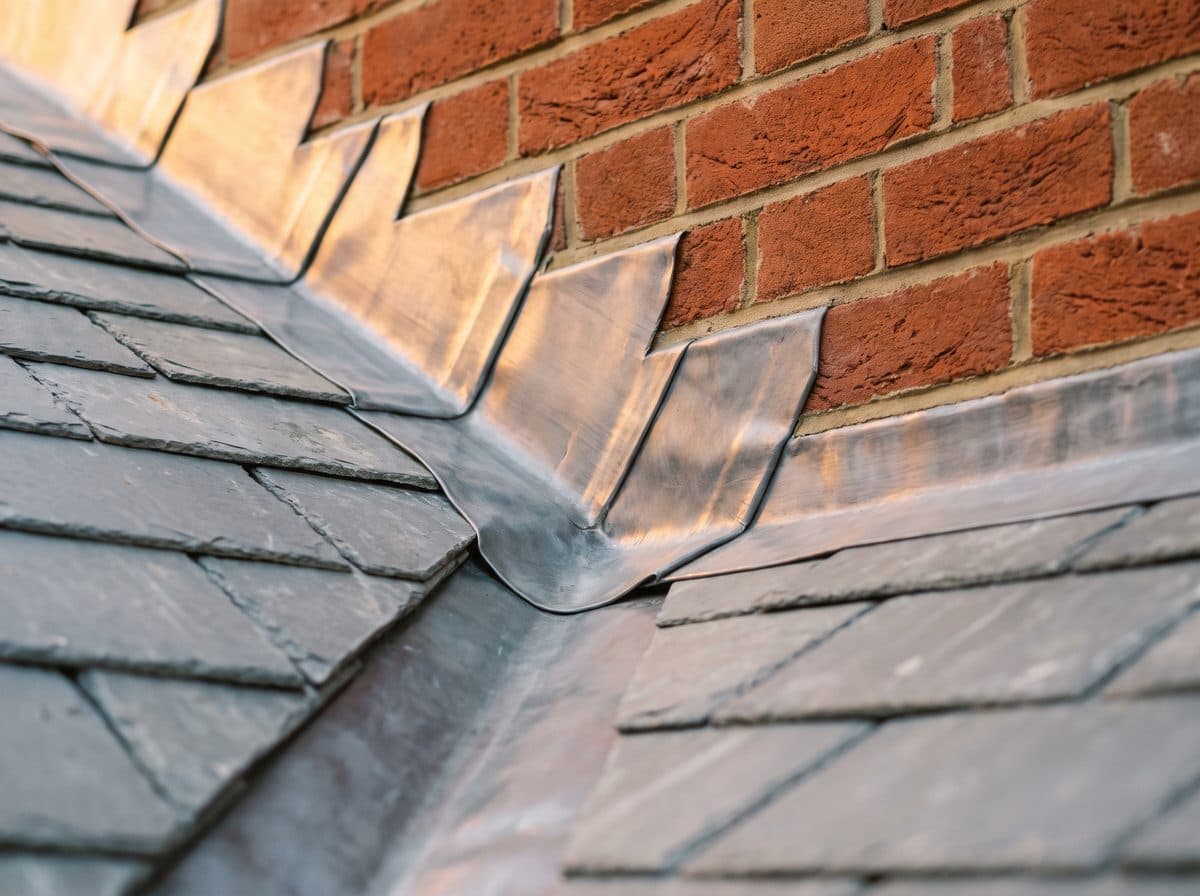
- Lead flashing at a chimney that has lifted away from the brickwork
- Any repair that has obviously been done with mortar, mastic or flashing tape
- Plants or thick moss growing along a valley or in the gutter
- Vegetation growing out of a chimney stack
The four usual suspects
In our experience the overwhelming majority of leaks on older British houses come from one of four places, and none of them is the middle of an open roof slope.
- Chimney flashings, where lead meets brickwork and mortar has eroded
- Valleys, where two roof slopes meet and debris collects
- Around rooflights, almost always a flashing problem rather than the unit
- Slipped or cracked tiles, particularly after high winds
All four are repairs rather than re-roofs, provided they are caught before the water has been getting into the timber for a season. That is the whole argument for looking early.
If you find water coming in now
Get a bucket under it and move anything electrical out of the way. If water is pooling in a ceiling and the plaster is bulging, it is usually safer to pierce it deliberately with a screwdriver so it drains in one controlled spot than to let the whole ceiling come down at once. Then call someone. Do not go up on the roof yourself in the weather that caused the problem.
Services mentioned in this article
Emergency Leak Repair
Rapid response to stop active leaks day or night. We arrive fast and prevent further water damage to your property.
Read moreRoof Repairs
Fast diagnosis for leaks, cracks, and storm damage. We restore your roof quickly with no hidden costs or shortcuts.
Read moreLead Flashing
Professional lead flashing around chimneys, valleys, and walls. Watertight seals meeting building standards.
Read more