It is one of the most common calls we get, and it usually arrives after someone has already had the wall replastered once. The patch dries, looks fixed for a few months, and reappears in the same place after the first sustained wet spell.
That pattern is diagnostic. Damp that returns seasonally in the same spot on a chimney breast is water getting in from outside, and no amount of work on the inside face of the wall will stop it.
A chimney is the most exposed masonry you own
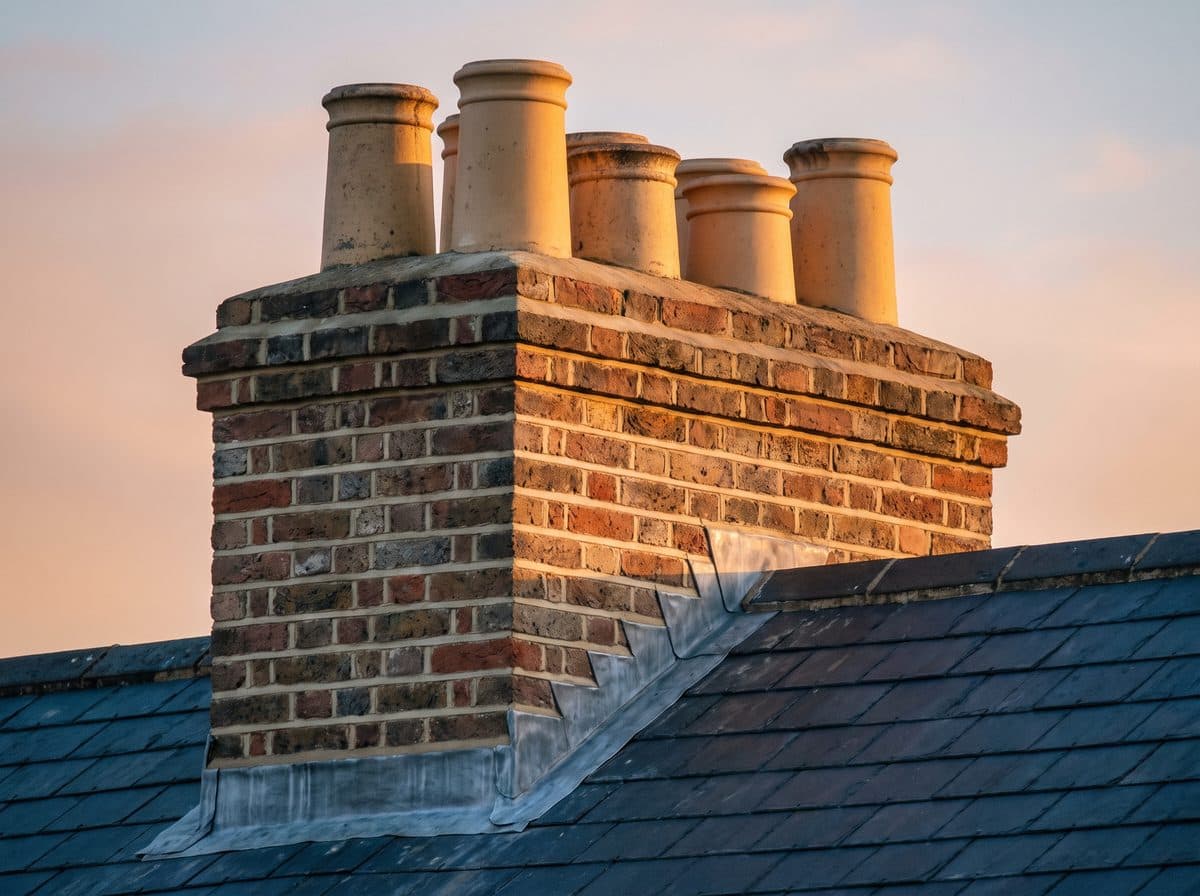
Think about where a stack sits. It stands clear of the roof with no covering over it, catching wind-driven rain from every direction, and on much of Britain's older housing stock it has been doing that since the nineteenth century. Everything else on the building has a roof over it. The chimney is the roof.
The four places water gets in
- Eroded pointing — mortar joints weathered back so rain soaks into the brickwork itself
- Cracked flaunching — the mortar fillet around the pots, which sheds water off the top of the stack until it splits
- Failed flashing — the leadwork skirting the base where the stack meets the roof, especially where it has been patched with mortar or mastic
- An open flue — an unused chimney with no cowl, letting rain straight down inside
Water entering at any of those points travels down inside the stack, through the brickwork, and emerges on the inside face of the breast in the room below. Often that is a bedroom or a loft, one floor down from where the water got in.
How to tell it apart from other damp
Rising damp does not appear halfway up a wall on the first floor. Condensation tends to show on cold external walls and in corners, is worse in winter with the windows shut, and comes with black spot mould rather than a defined brown-edged stain. Water from a chimney typically gives you a distinct patch on the breast that darkens after rain and fades in dry weather — sometimes with white salt deposits as the moisture brings salts out of the masonry.
If a stain gets noticeably darker a day or two after heavy rain and lighter during a dry spell, you are looking at water ingress, not condensation.
What fixing it properly involves
Depending on which of the four causes it is: repointing the eroded joints, renewing the flaunching around the pots, replacing the lead flashings and soakers at the base, or capping a disused flue with a cowl that keeps rain out while still letting it breathe. Where frost has spalled the brick faces or the stack has moved, rebuilding the affected courses is the honest answer rather than pointing over it.
Only then is replastering worth doing — and the wall needs to be given time to dry out first, or you will be doing it twice.
One thing worth knowing: a disused chimney does not have to come down. Capping it is usually cheaper than removal and keeps the roofline looking as the street expects, which matters on a terrace where every other house still has its stack.
Services mentioned in this article
Chimney Repair
Repointing, rebuilding, flashing, and cowl services. Restores chimney safety, prevents damp, and improves structure.
Read moreLead Flashing
Professional lead flashing around chimneys, valleys, and walls. Watertight seals meeting building standards.
Read moreRoof Repairs
Fast diagnosis for leaks, cracks, and storm damage. We restore your roof quickly with no hidden costs or shortcuts.
Read more